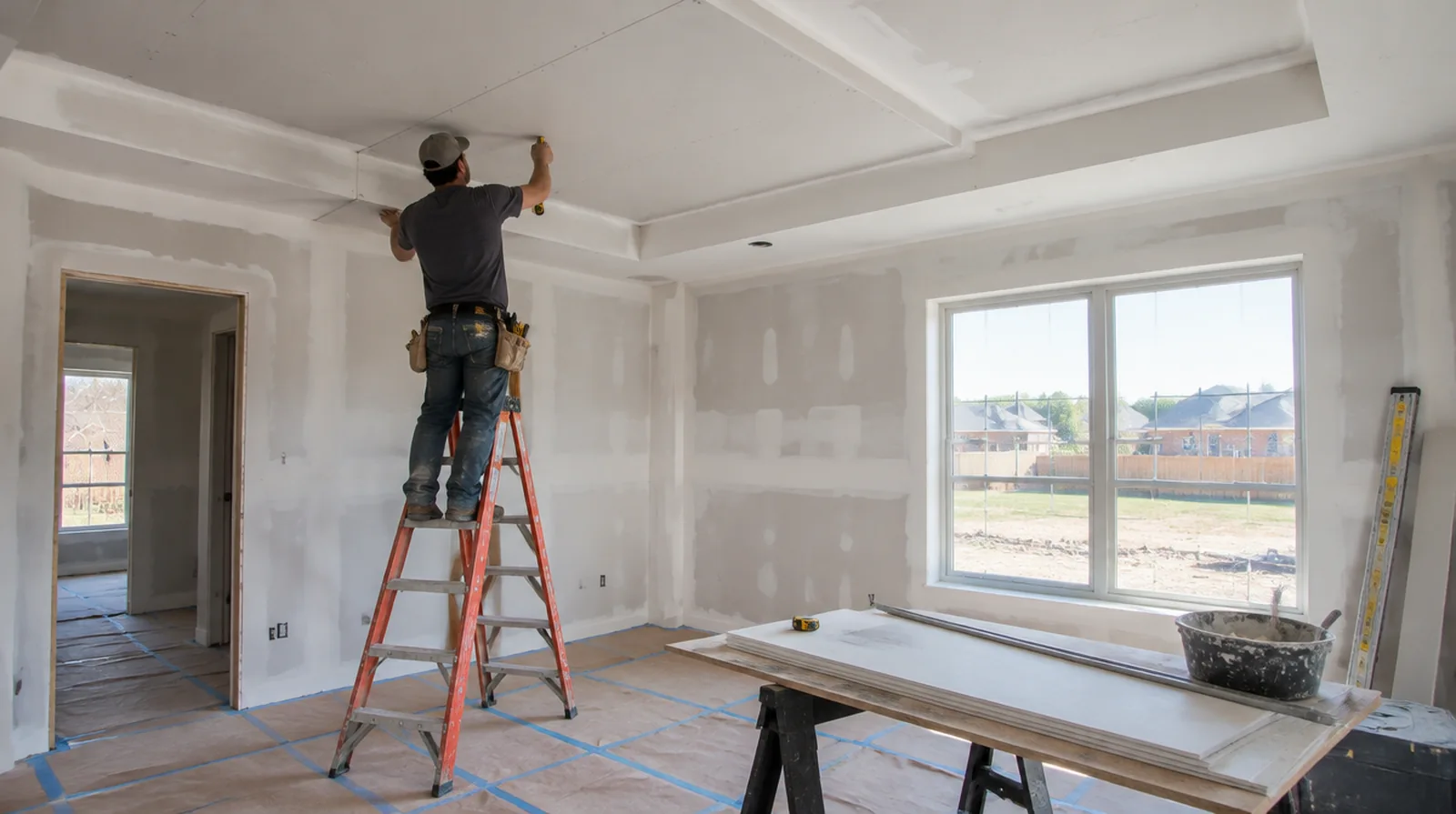
Discuss texture expectations
A smooth ceiling and a textured ceiling need differing finishing plans around the repaired section. An agreed sample can show the likely limits of a local texture blend before the full repair proceeds. For an initial assessment from pictures, provide an overall room photograph and a detailed view of the defect so both context and scale are apparent.
Set the repainting scope
A small fresh white patch can stand out against an older ceiling even when the surface is level. Painting to a natural boundary may be preferable to touching up only the repair. If occupancy must resume on a certain day, include the later primer and paint stages in the timetable as well as drywall installation and finishing.
Evaluate sagging sections
A sagging ceiling needs its supports, fixings and damaged materials assessed, not simply smoothed. Keep people away from an unstable area while the appropriate professional evaluates it. If the completion date matters most, allow for intervals between coats as well as active labor rather than assuming the entire process happens continuously.
Treat the joints overhead
Reinforce the ceiling patch joints and taper the finishing layers well beyond their edges. Because windows often light ceilings obliquely, a narrow raised blend can remain conspicuous. For a surface that will receive wall covering, share the product requirements early so the finishing stage supports the planned decorative treatment.
Separate fixtures from board work
Electrical fittings, sprinkler components and mechanical grilles can involve other trades or building approvals. Clarify who disconnects and reinstalls anything that interferes with access to the damaged area. Where several contractors share the renovation, identify the inspection and handover milestones that determine when each following stage can proceed.
Cut back to sound material
A reliable replacement cannot depend on board that has lost strength through water exposure. Cut to a stable boundary that also permits secure fixing and an effective finishing blend. Where the wall surface meets fixed furniture, clarify whether removal is included or whether the finish will terminate at the accessible edge.
Review the room after drying
Inspect from the doorway and from positions near the windows once the finishing layers have dried. Record any remaining paint preparation before the protection comes down and the space returns to use. If the wall work belongs to a broader renovation, coordinate its order with flooring, cabinetry and trim instead of scheduling finishing in isolation.
Address isolated stains
Inactive discoloration may require a primer selected to block the remaining stain. Primer selection depends on the remaining discoloration and ought not to be used to conceal active moisture. Where several contractors share the renovation, identify the inspection and handover milestones that determine when each following stage can proceed.
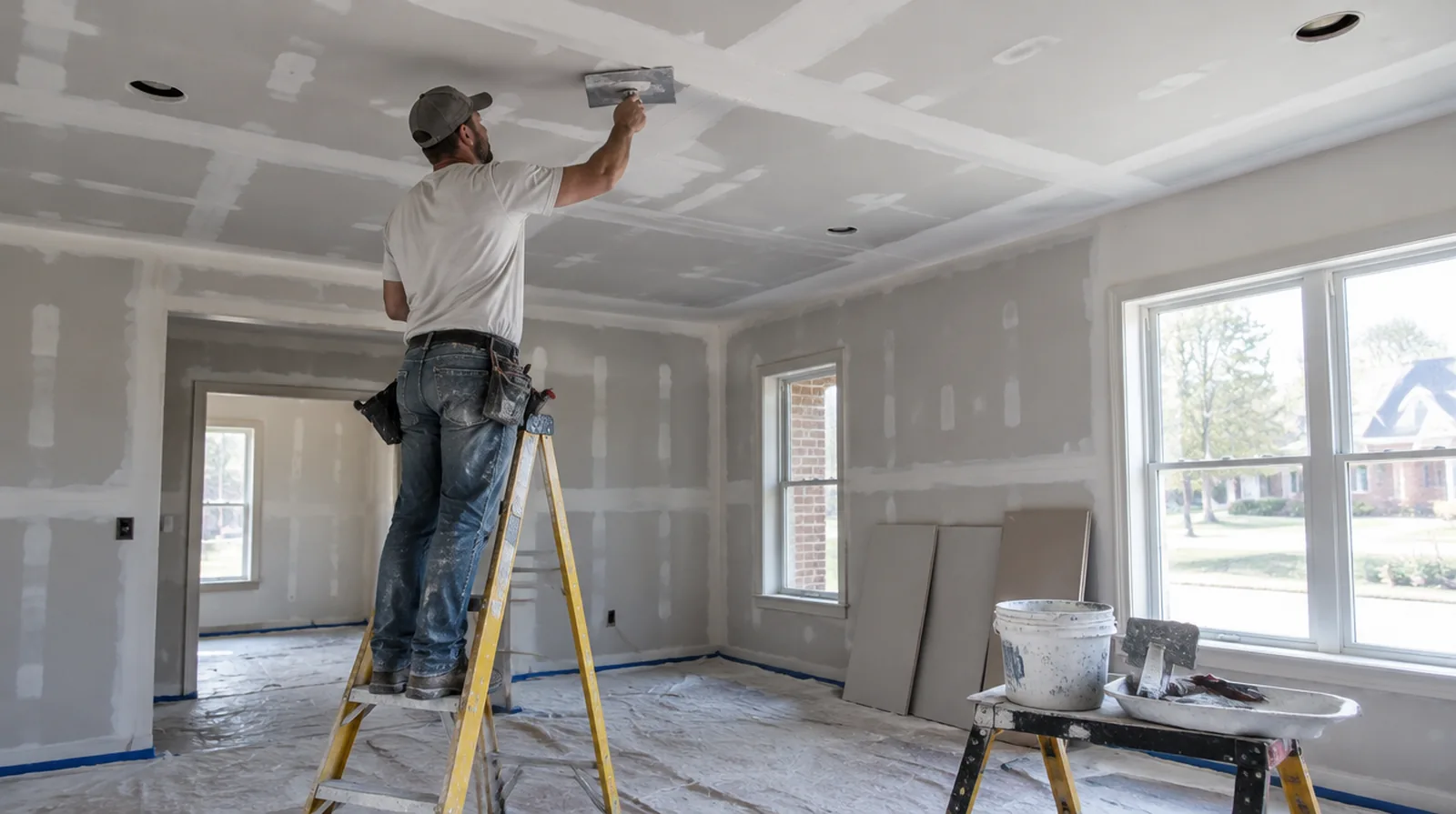
Identify the existing surface
A ceiling may contain gypsum board, plaster or several layers from earlier renovations. The repair method should match the actual construction instead of assuming every white surface is drywall. When a paint contractor follows the drywall work, define the surface condition being handed over and decide who handles any minor final touch ups.
Check the source of damage
A visible overhead mark may be evidence of a problem in a service or space above the interior. Resolve the source of moisture before relying on a decorative ceiling repair to remain sound. If scheduling is the main concern, separate hands on labor from drying intervals instead of treating every visit as a full day of active work.
Project context in Norman
Once that boundary is clear, plan protection and access for the selected method. At handover, review the repaired edge in ordinary room light and agree on the repainting extent.
Scope questions before finishing
If materials must cross common building areas, plan the protection and access route so other occupants are not needlessly obstructed by deliveries.
Where a finished perimeter is prominent, decide whether trim stays in position or is removed before agreeing how the new surface meets that edge.
For a distinctive existing pattern, retain a reference sample or detailed picture to make the matching discussion more specific.
When concealed damage is possible, establish how additional findings and any proposed removal will be recorded before the scope changes.
At an edge beside built in furniture, state whether the obstruction will be removed or whether finishing stops at the section that can be reached.
For a tightly furnished room, plan temporary storage and the minimum working clearance before material is carried into the property.
When reviewing the finished work, use the agreed lighting and natural room viewpoints so the assessment reflects the intended use of the space.
If the completion date matters most, allow for intervals between coats as well as active labor rather than assuming the entire process happens continuously.
When photographs are used for an initial discussion, include a wide room view as well as a close view so scale and surrounding finishes are understandable.
At a repair beside an opening, allow clearance for moving board through the doorway and space to use the finishing tools effectively.
When building management controls access, agree delivery hours and common area protection before committing to a start or finish date.
For an initial assessment from pictures, provide an overall room photograph and a detailed view of the defect so both context and scale are apparent.
Explore the Norman drywall overview for related options, or read the project planning information before arranging the next stage.
More planning details for Norman
A Norman doorway with a recurring hairline crack is a reason to discuss movement history rather than immediately choose the quickest surface treatment. Note when the crack appears, whether nearby doors change operation and what earlier repairs involved. A drywall contractor can describe the surface work, while a concern about the supporting structure may need a separate professional assessment.