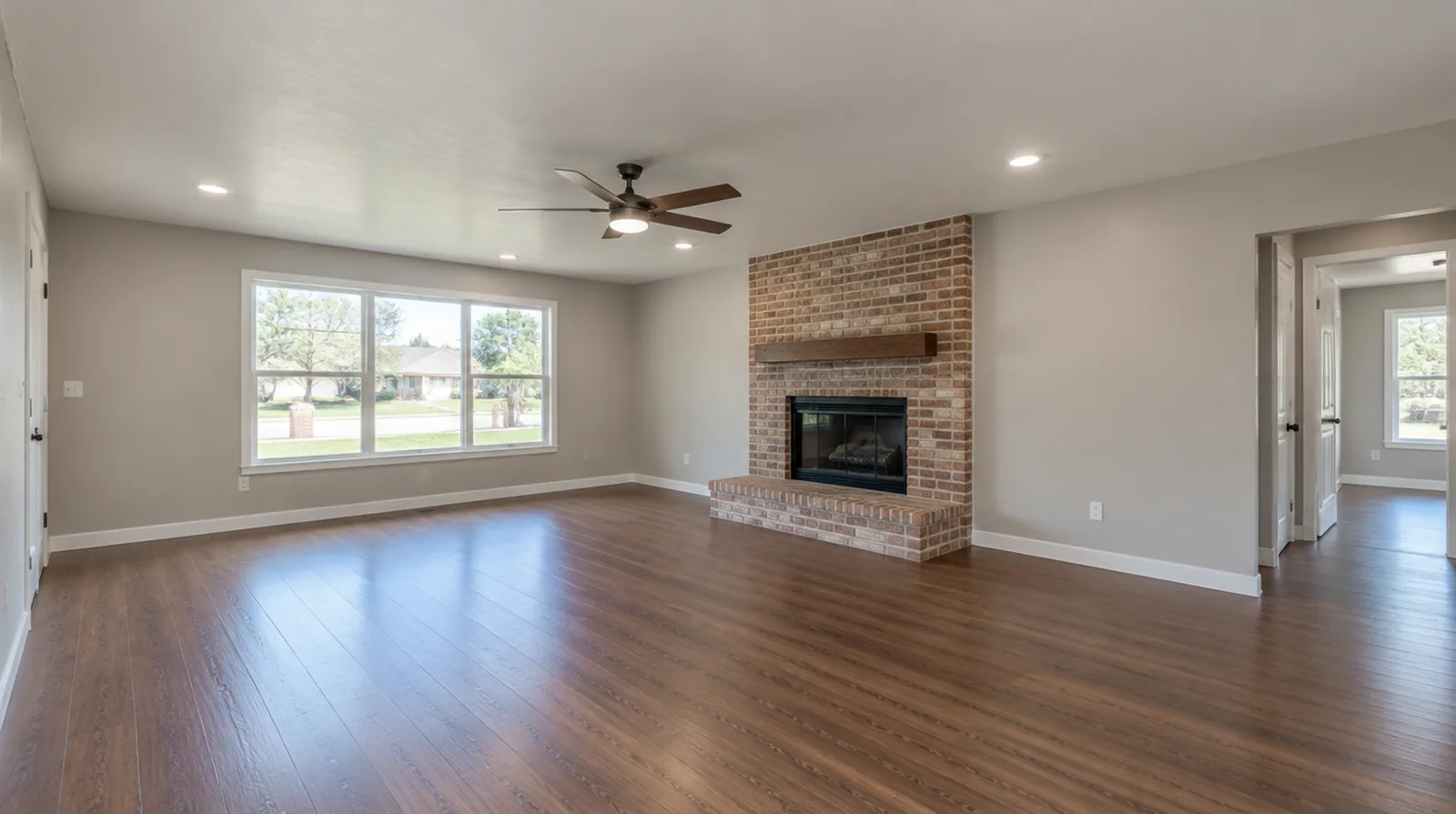
Protect the entire room
Overhead coating removal can distribute debris throughout the room unless protection is comprehensive. Arrange masking, furniture relocation and a suitable removal route rather than covering only a small patch below. For an older repair with no clear history, describe when the mark first appeared and whether it has changed through more than one season.
Plan fixture coordination
Ceiling fittings may require qualified disconnection or other separate handling before access is available. Specify who will deal with lights, alarms and reinstatement instead of assuming those tasks are included. When photographs are used for an initial discussion, include a wide room view as well as a close view so scale and surrounding finishes are understandable.
Confirm primer and paint
Plan compatible primer and paint for the exposed ceiling once repairs and finishing are dry. Define whether decoration is included or whether the drywall handover ends at preparation for coatings. For a room that stays in use, set a workable boundary around construction while retaining the access people need for normal daily activities.
Check for painted coatings
Previously painted popcorn texture may resist simple wetting and require a different removal approach. Assess a controlled test area so the method, labor and potential substrate repairs are understood. If the proposal requires return visits, identify the purpose of each stage and the intervals during which finishing material needs to remain undisturbed.
Plan cleanup and reopening
Allow for debris removal, drying and decorating rather than assuming the interior is complete immediately after scraping. Allow for drying and painting time instead of assuming the space is usable immediately after scraping. When the project space includes a doorway, check the clearance for panel movement as well as the amount of space available for finishing tools.
Avoid unnecessary saturation
Removal techniques should never soak and weaken the gypsum board beneath the coating. The assessment needs to consider how the original finish responds and what the substrate can tolerate. When painting is outside the proposal, describe the remaining decorative preparation clearly so another contractor can price that stage accurately.
Separate specialist work
Removal of a confirmed hazardous coating requires the relevant specialist process, not ordinary ceiling scraping. Have an appropriate professional address containment, disposal and handling before subsequent drywall finishing is arranged. When damage followed other building work, describe the nearby alterations and the sequence between those changes and the first visible defect.
Establish material safety
Older textured ceiling coatings may contain asbestos and should never be scraped without appropriate evaluation. Arrange qualified testing where warranted and follow applicable requirements before disturbing the material. When the history of a repair is uncertain, note when it became visible and whether its appearance has altered across differing seasons.
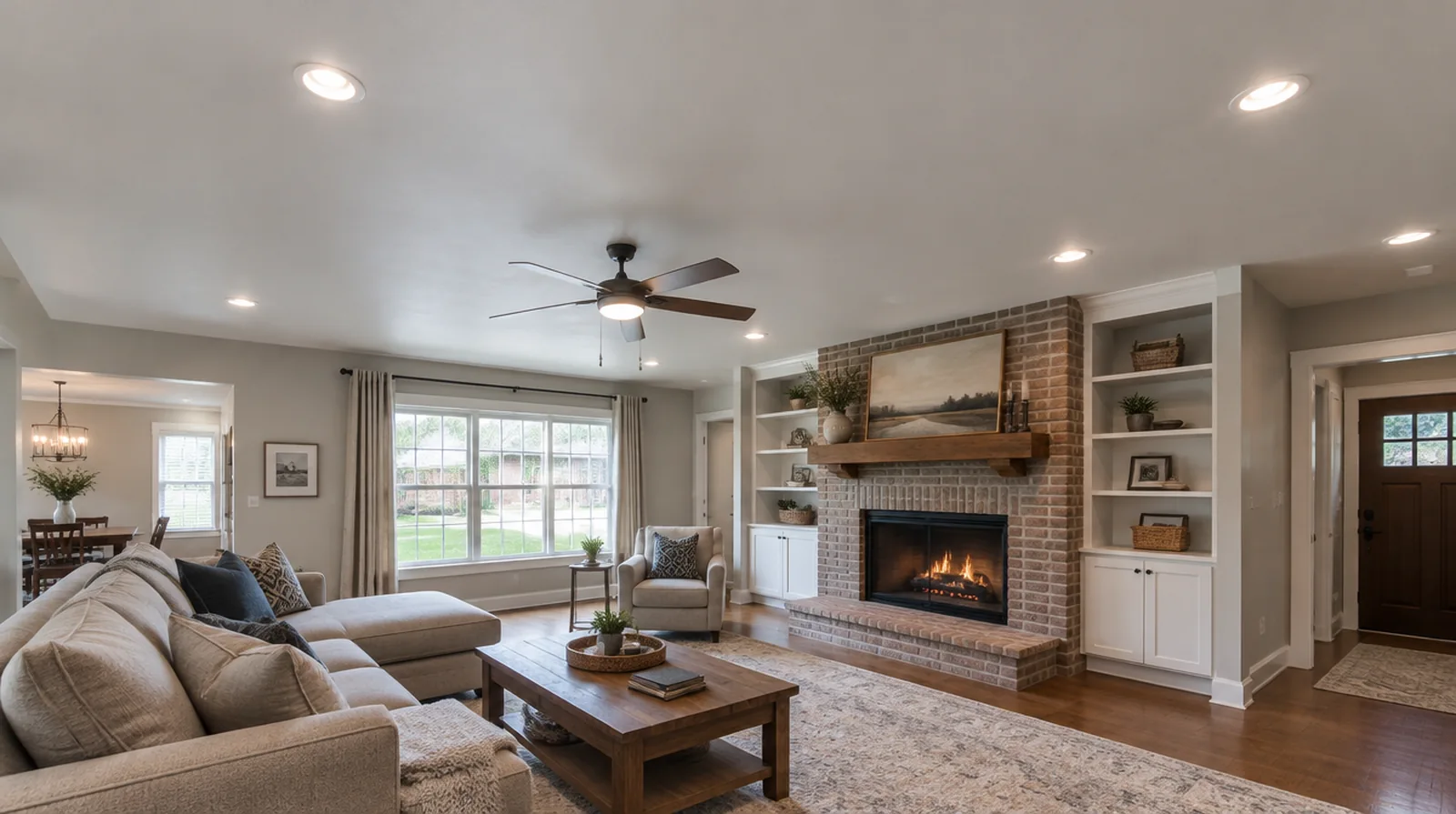
Review ceiling condition
A textured ceiling can hide old repairs and seams that were never prepared for a smooth appearance. A smooth replacement finish could call for additional repair after the coating has been safely removed. If a room has only limited ventilation, discuss how the finishing materials can dry without disrupting comfort or spreading dust elsewhere.
Repair exposed imperfections
Removal can uncover damaged paper or shallow defects that must be stabilized before finishing. The repair allowance should be discussed before the original texture is removed. If occupancy must resume on a certain day, include the later primer and paint stages in the timetable as well as drywall installation and finishing.
Project context in Norman
Once that boundary is clear, plan protection and access for the selected method. A drywall contractor can describe the surface work, while a concern about the supporting structure may need a separate professional assessment.
Scope questions before finishing
Where a finished perimeter is prominent, decide whether trim stays in position or is removed before agreeing how the new surface meets that edge.
When the decorative coating has been selected, tell the finisher its intended sheen and color while the surface preparation standard is still being agreed.
For a small repair with extensive setup, compare the total scope rather than assuming the price should follow the hole dimensions alone.
If materials must cross common building areas, plan the protection and access route so other occupants are not needlessly obstructed by deliveries.
Where existing floors will remain, specify protective measures and review the path used by panels, equipment and finishing tools.
If the problem developed after another renovation, explain which nearby materials or building systems changed before the damage became visible.
If the proposal requires return visits, identify the purpose of each stage and the intervals during which finishing material needs to remain undisturbed.
While a removed panel exposes the wall cavity, complete the necessary review of concealed work before replacement board closes the opening.
Where the wall surface meets fixed furniture, clarify whether removal is included or whether the finish will terminate at the accessible edge.
If the completion date matters most, allow for intervals between coats as well as active labor instead of assuming the entire process happens continuously.
If a distinct painter completes decoration, agree the condition of the handed over surface and assign responsibility for small final corrections.
When damage followed other building work, describe the nearby alterations and the sequence between those changes and the first visible defect.
Explore the Norman drywall overview for related options, or read the project planning information before arranging the next stage.
More planning details for Norman
A Norman doorway with a recurring hairline crack is a reason to discuss movement history rather than immediately choose the quickest surface treatment. Note when the crack appears, whether nearby doors change operation and what earlier repairs involved. Seasonal outdoor temperature swings do not remove the need for suitable indoor drying conditions.