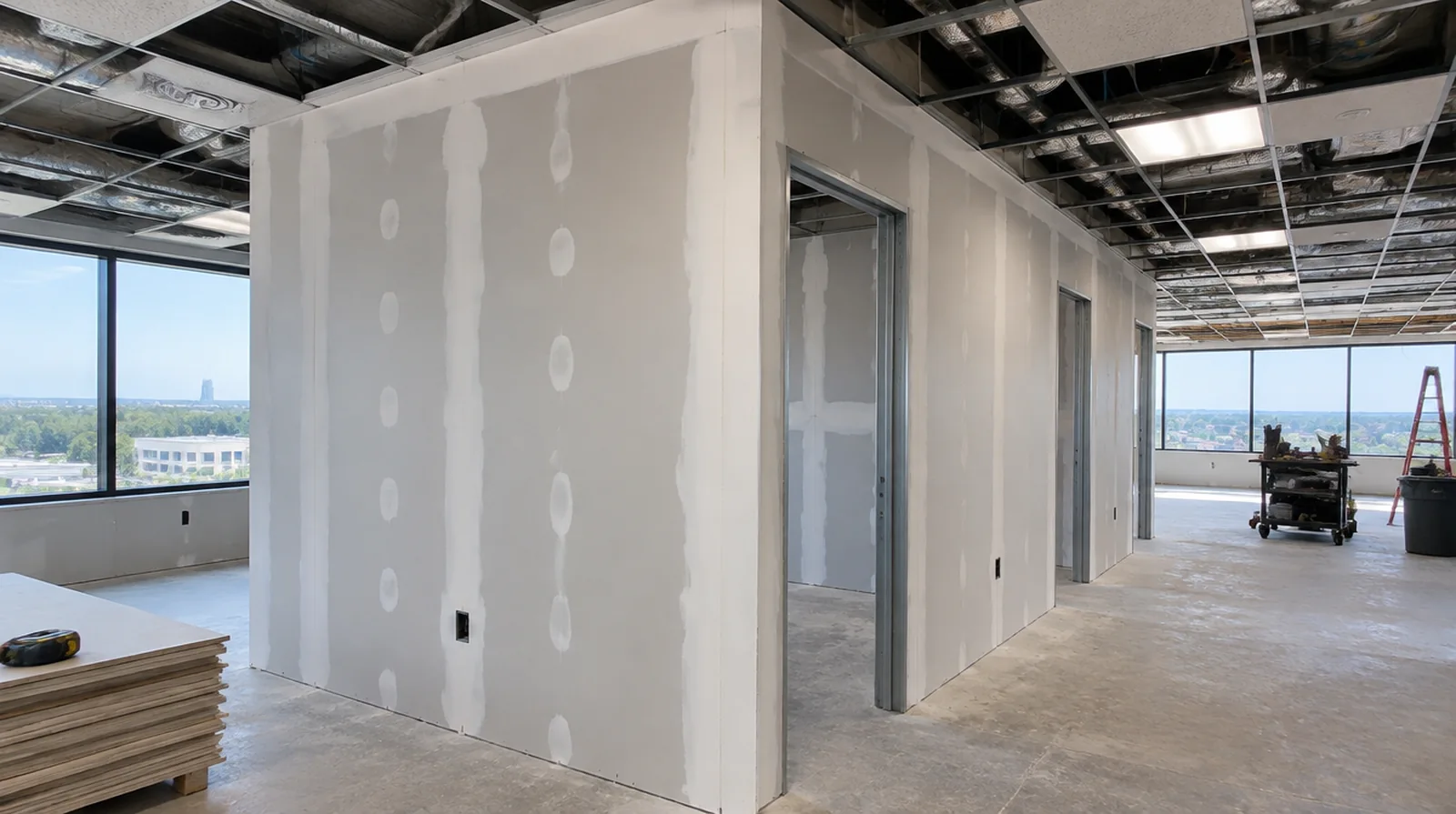
Detail penetrations properly
Openings for services must retain the details required by the wall surface performance specification. Finishing compound alone is not a universal substitute for specified sealants or firestopping systems. Where several contractors share the renovation, identify the inspection and handover milestones that determine when each following stage can proceed.
Sequence concealed trades
Electrical, data, plumbing and mechanical work might need access before the walls are closed. A coordinated readiness check reduces avoidable openings through newly installed drywall. If the proposal requires return visits, identify the purpose of each stage and the intervals during which finishing material needs to remain undisturbed.
Coordinate ceiling junctions
Partition heads and suspended ceiling interfaces need a detail that suits movement and the assembly design. The drywall work should not interfere with building systems or conceal access that must remain available. If materials must cross common building areas, plan the protection and access route so other occupants are not needlessly obstructed by deliveries.
Review assembly requirements
The required performance of a commercial wall affects its framing details and gypsum layers. Follow the specified fire, acoustic and height requirements instead of substituting one generic panel arrangement. When a paint contractor follows the drywall work, define the surface condition being handed over and decide who handles any minor final touch ups.
Define the tenant scope
Establish the partition layout and intended room uses before measuring a tenant improvement. Separate owner responsibilities from tenant responsibilities so the proposal covers a defined package of work. Where light reflects along the wall, inspect the complete plane instead of limiting the review to the edge immediately next to the repaired section.
Coordinate approvals
Building management and local requirements may affect working hours, deliveries and inspection milestones. Identify which consents and project information the client or design team must provide. Where a finished perimeter is prominent, decide whether trim stays in position or is removed before agreeing how the new surface meets that edge.
Manage occupied areas
Dust protection and a defined work boundary are important when nearby rooms remain in use. Set noise and daily cleanup expectations in relation to the activities that will continue nearby. For a room with restricted airflow, plan drying conditions alongside dust protection and the comfort of people occupying neighboring spaces.
Schedule inspection stages
Some checks need to happen before board installation while others occur after joints are complete. Give the responsible reviewer an opportunity to check before installation or finishing conceals the detail. If there is a fixed move in date, reserve adequate time for the coating stages after drywall work rather than counting only the installation period.
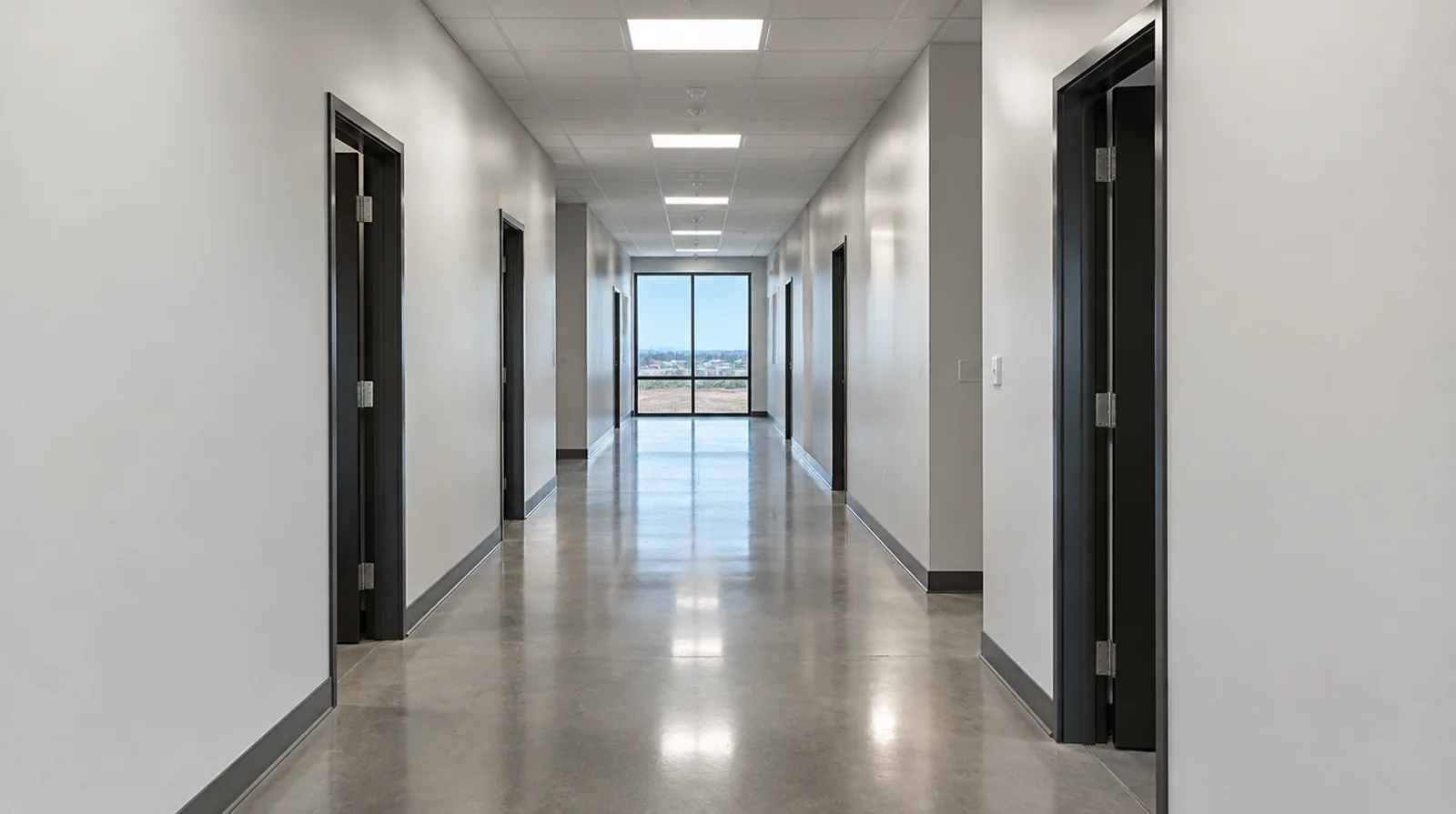
Specify the visible finish
Choose the finishing standard according to each commercial room and its noticeable lighting conditions. Agree on appearance requirements before final coats rather than resolving them after painting. For a distinctive existing pattern, retain a reference sample or detailed picture to make the matching discussion more specific.
Close out with clear limits
At handover, identify which items belong to drywall and which remain with the decorating or other trades. Record the outstanding work and the agreed condition before releasing the completed work zone. For a project with several trades, agree which inspection or handover point must happen before the next person starts work.
Project context in Norman
A drywall contractor can describe the surface work, while a concern about the supporting structure may need a separate professional assessment. Once that boundary is clear, plan protection and access for the selected method.
Scope questions before finishing
If the room will remain occupied, identify a workable separation between the project space and the space that still needs daily access.
When a paint contractor follows the drywall work, define the surface condition being handed over and decide who handles any minor final touch ups.
When the decorative coating has been selected, tell the finisher its intended sheen and color while the preparation of the surface standard is still being agreed.
Where flooring is staying in place, agree on protective coverings and check that tools and material handling will not damage the visible finish.
When a wall has repeated defects, keep a record of earlier repair attempts so a new assessment does not simply repeat an unsuccessful approach.
For a room with restricted airflow, plan drying conditions alongside dust protection and the comfort of people occupying neighboring spaces.
When panel replacement exposes a cavity, resolve any required inspection before that opening is closed and the finishing work begins.
Where existing floors will remain, specify protective measures and review the path used by panels, equipment and finishing tools.
When reviewing the finished work, use the agreed lighting and natural room viewpoints so the assessment reflects the intended use of the space.
For an initial assessment from pictures, provide an overall room photograph and a detailed view of the defect so both context and scale are apparent.
For a surface carrying numerous paint layers, discuss whether differences in the retained profile or sheen justify decorating a broader area.
At a surface receiving strong window light, review a dried trial from the side in addition to the normal straight view of the wall.
Explore the Norman drywall overview for related options, or read the project planning information before arranging the next stage.
More planning details for Norman
A Norman doorway with a recurring hairline crack is a reason to discuss movement history rather than immediately choose the quickest surface treatment. Note when the crack appears, whether nearby doors change operation and what earlier repairs involved. Seasonal outdoor temperature swings do not remove the need for suitable indoor drying conditions.