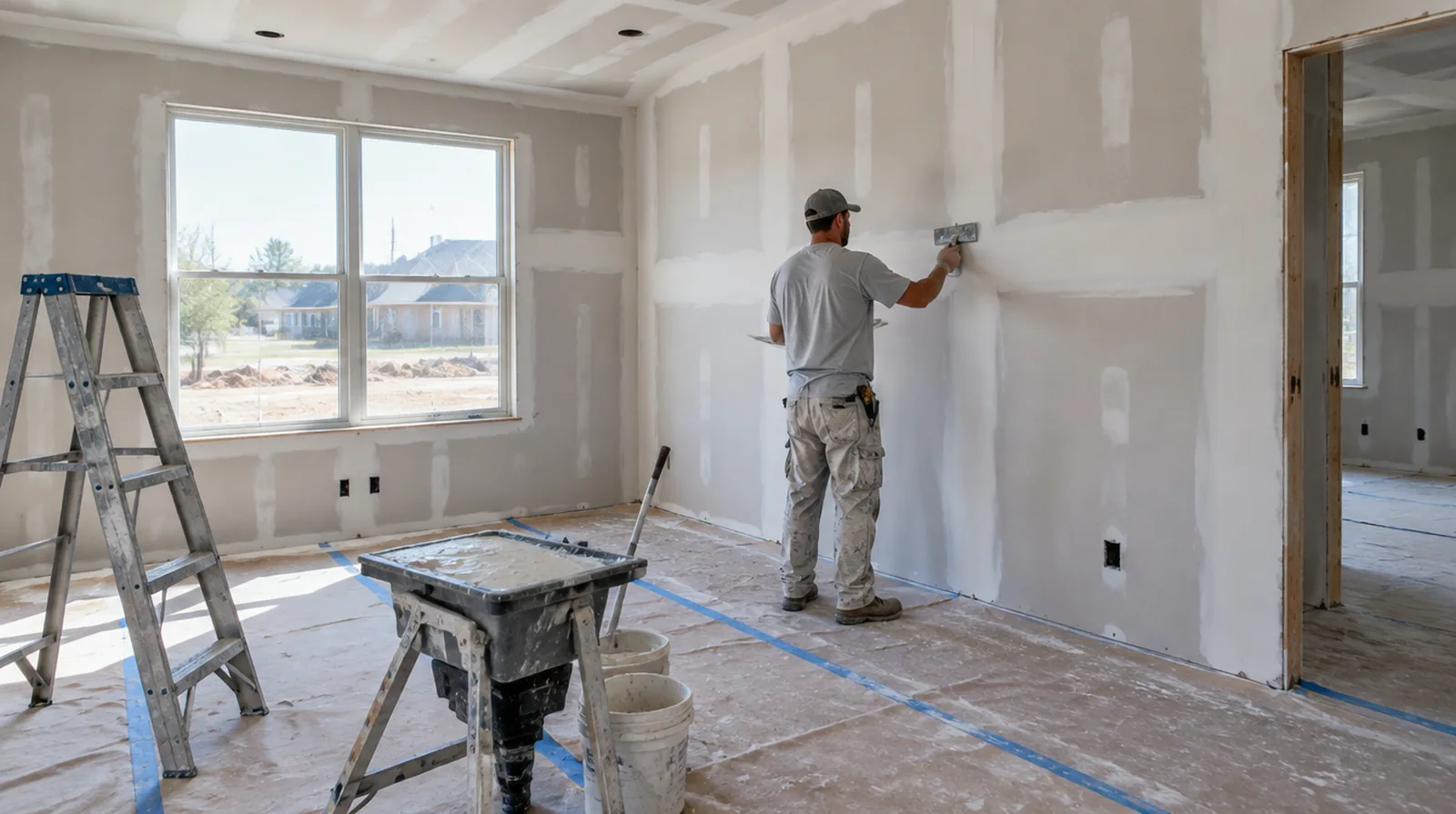
Assess the hung board
Misaligned panels or unsupported joints need attention before the finishing layers can perform properly. Check how the sheets sit and how the fixings hold them instead of beginning with compound immediately. For an older repair with no clear history, describe when the mark first appeared and whether it has changed through more than one season.
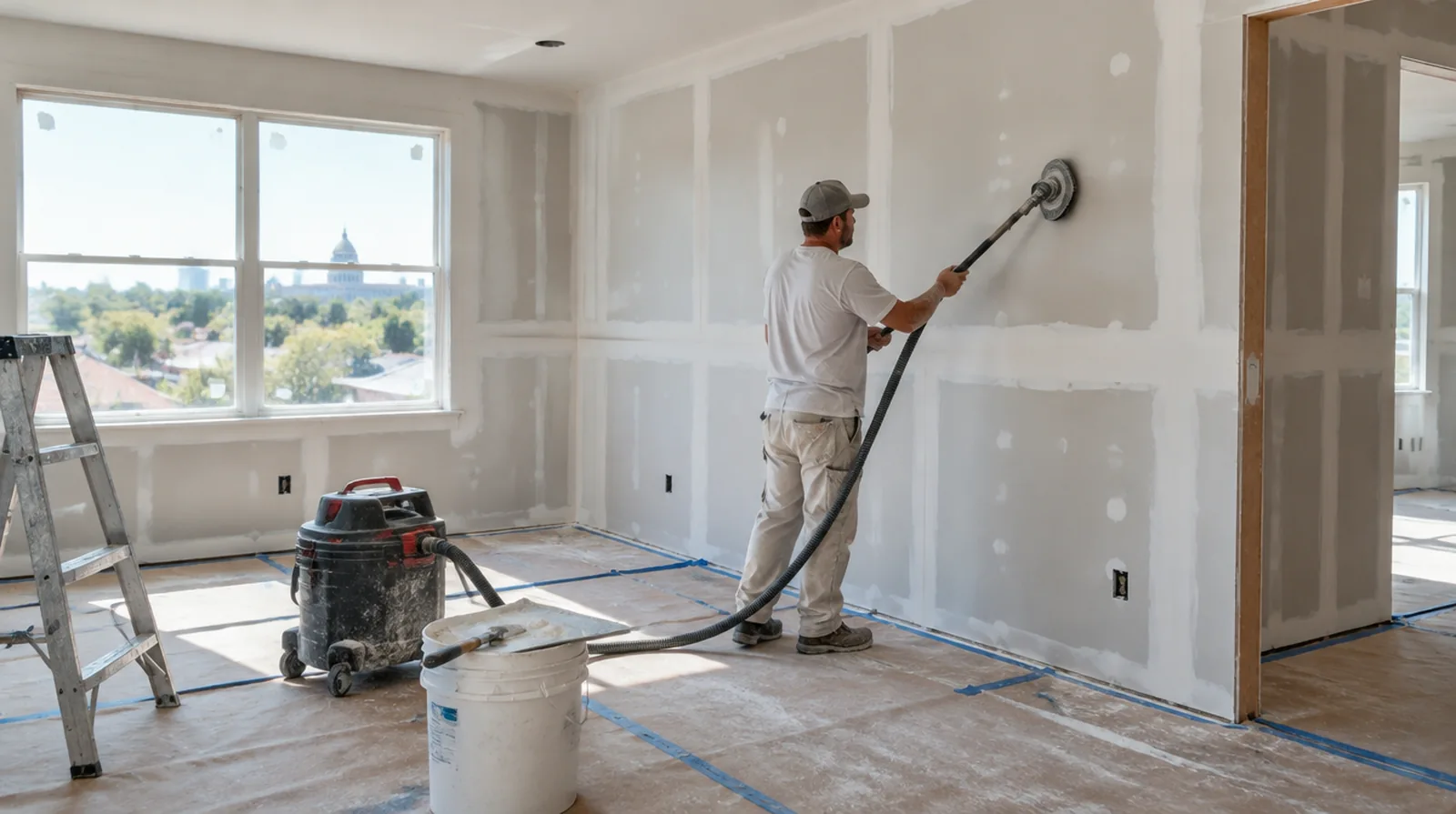
Use controlled sanding
Sanding should refine small tool marks rather than grind away a badly shaped joint. Dust extraction and protection matter even for a room with only a few seams. If a distinct painter completes decoration, agree the condition of the handed over surface and assign responsibility for small final corrections.
Keep external corners straight
Corner bead provides a consistent line but needs secure installation and sufficient compound coverage. Resolve distortion or damage to the bead before successive coats make correction more challenging. For a small repair with extensive setup, compare the total scope rather than assuming the price should follow the hole dimensions alone.
Choose joint materials
Bedding coats and final coats serve distinct purposes and may use distinct compatible compounds. Selection should reflect joint type, conditions within the room and the manufacturer guidance rather than convenience alone. If an independent painter completes decoration, agree the condition of the handed over surface and assign responsibility for small final corrections.
Cover fastener heads
Fill fastener depressions level with the surrounding face without creating avoidable mounds. Adjust any projecting or paper breaking screw before applying material over the location. When comparing competing estimates, make sure their protection, surface finish and disposal allowances describe equivalent work before comparing the final prices.
Allow genuine drying time
Do not judge a coat ready solely because its outer face appears firm. The drying interval changes with indoor humidity, temperature and the available movement of air. If scheduling is the main concern, separate hands on labor from drying intervals instead of treating every visit as a full day of active work.
Agree on the visual standard
The expected decorative paint sheen, room lighting and viewing distance influence how much finishing a wall needs. A written finish level gives the installer and painter a clearer shared target. For a planned new wall mounted fixture, resolve its backing requirements while the cavity remains open instead of cutting into completed drywall later.
Inspect the whole wall
Review corners, returns and service openings as well as the straight seams in the main wall. Check the finished plane under the planned lighting and from a side angle where possible. At a repair beside an opening, allow clearance for moving board through the doorway and space to use the finishing tools effectively.
Build the seam gradually
Make later joint coats progressively broader so the transition becomes less abrupt. Square cut sheet ends need particular care because they do not offer the recess of tapered factory edges. If the existing finish is unusual, keep a small reference sample or a close photograph to support the discussion about blending and restoration.
Embed the tape
A continuous bedding layer supports the tape and reduces the chance of air bubbles along the seam. Inside corners need a crisp fold and balanced coverage on both faces. Where occupants have dust sensitivity concerns, agree containment and cleaning measures before settling the way the interior will be staged.
Project context in Norman
At handover, review the repaired edge in ordinary room light and agree on the repainting extent. Once that boundary is clear, plan protection and access for the selected method.
Scope questions before finishing
Where the quoted work stops before painting, request a clear description of what remains so the next decorating stage can be priced realistically.
When the same defect has returned, share information about previous repair methods so the next assessment can consider why they did not last.
Where several contractors share the renovation, identify the inspection and handover milestones that determine when each following stage can proceed.
For a tightly furnished room, plan temporary storage and the minimum working clearance before material is carried into the property.
If occupancy must resume on a certain day, include the later primer and paint stages in the timetable as well as drywall installation and finishing.
Before comparing two proposals, check that both include the same protection, finishing and cleanup boundaries instead of comparing totals alone.
When painting is outside the proposal, describe the remaining decorative preparation clearly so another contractor can price that stage accurately.
Where a neat final edge matters, agree whether the finish ends against existing trim or whether that trim will be removed and replaced.
If the decorative coating is already chosen, share its sheen and color early because those choices influence how preparation of the surface is judged.
For a surface carrying numerous paint layers, discuss whether differences in the retained profile or sheen justify decorating a broader area.
If materials must cross common building areas, plan the protection and access route so other occupants are not needlessly obstructed by deliveries.
For walls beside bright windows, review a dry sample from an oblique angle as well as looking straight at the repaired surface.
Explore the Norman drywall overview for related options, or read the project planning information before arranging the next stage.
More planning details for Norman
A Norman doorway with a recurring hairline crack is a reason to discuss movement history rather than immediately choose the quickest surface treatment. Note when the crack appears, whether nearby doors change operation and what earlier repairs involved. A drywall contractor can describe the surface work, while a concern about the supporting structure may need a separate professional assessment.