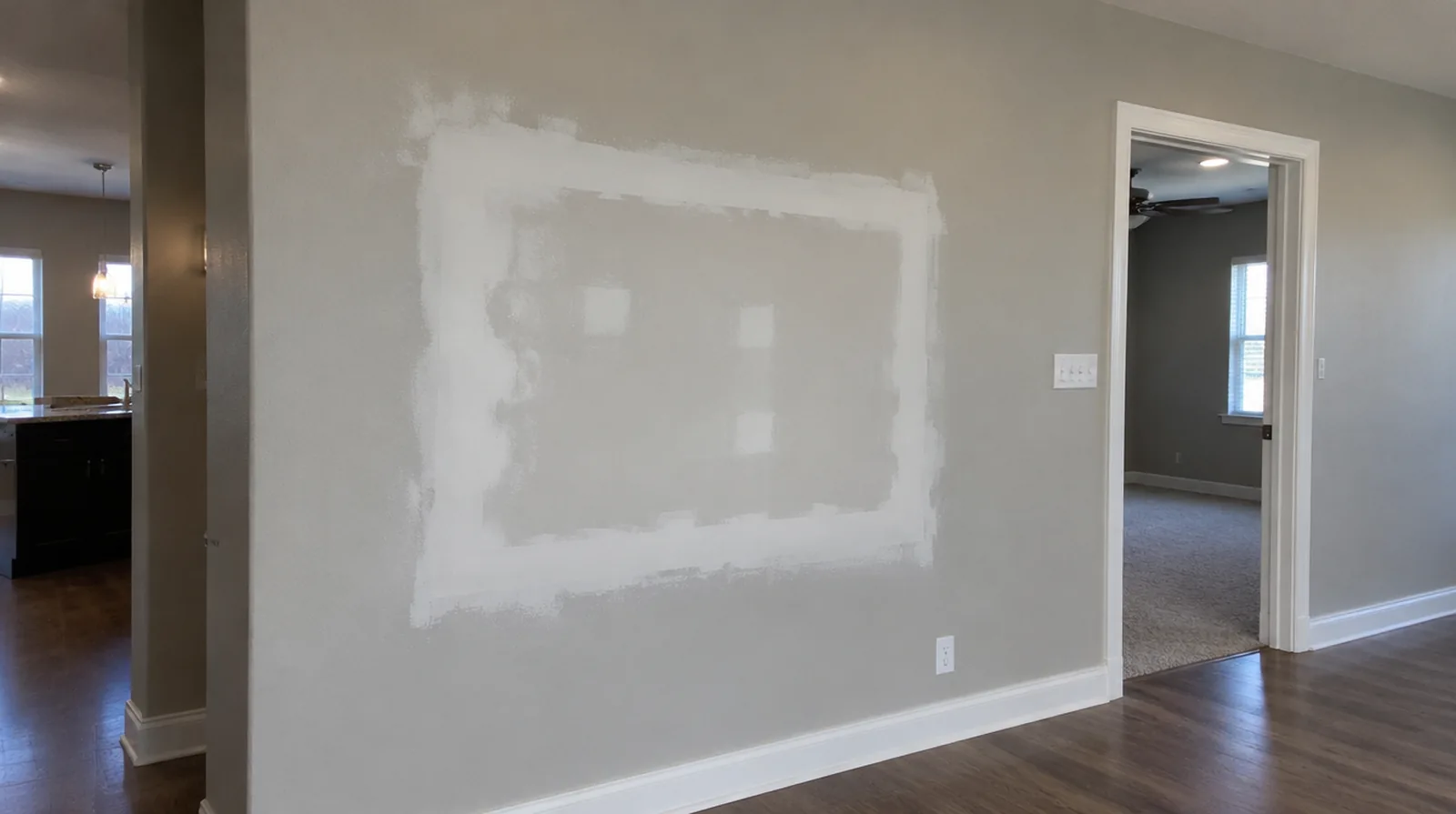
Support the replacement
Larger openings need a fitted board patch secured to framing or suitable backing instead of a thick mound of compound. The replacement panel thickness should match the original face so the joint can finish level. For a surface carrying numerous paint layers, discuss whether differences in the retained profile or sheen justify decorating a broader area.
Review with side lighting
Use an angled view as well as a direct view when reviewing a finished patch. Window light may reveal a contour that ordinary room lighting hides, while decorative paint sheen creates an independent issue. If materials must cross common building areas, plan the protection and access route so other occupants are not needlessly obstructed by deliveries.
Prepare for primer
Fresh compound and existing painted drywall absorb coatings differently unless the repair receives suitable primer. Establish whether suitable primer is part of the repair or will be applied by another contractor. For walls beside bright windows, review a dry sample from an oblique angle as well as looking straight at the repaired surface.
Identify the cause
A dent from moving furniture calls for a distinct repair than a joint that repeatedly opens beside a door. Check whether the wall feels firm and whether the defect has changed since it first appeared. When the decorative coating has been selected, tell the finisher its intended sheen and color while the substrate preparation standard is still being agreed.
Reinforce panel seams
The connection between old board and a patch needs reinforcing joint treatment. Embed the chosen tape fully in its intended compound so the edges bond without bubbles. For a tightly furnished room, plan temporary storage and the minimum working clearance before material is carried into the property.
Choose the patch boundary
The repair must reach gypsum and paper that remain intact, rather than stopping at the visible outline of the hole. A tidy rectangular cut often provides stronger backing than following an irregular broken edge. For a distinctive existing pattern, retain a reference sample or detailed picture to make the matching discussion more specific.
Build thin finishing coats
Several controlled applications are normally easier to flatten than one deep deposit of joint compound. Each layer needs adequate time needed for drying before the next pass can be judged accurately. Before comparing two proposals, check that both include the same protection, finishing and cleanup boundaries rather than comparing totals alone.
Handle small fastener marks
A bump over a fastener may reflect separation or movement at the panel support. Correct the fastening condition as needed before covering the mark with a new finishing coat. At an edge beside built in furniture, state whether the obstruction will be removed or whether finishing stops at the section that can be reached.
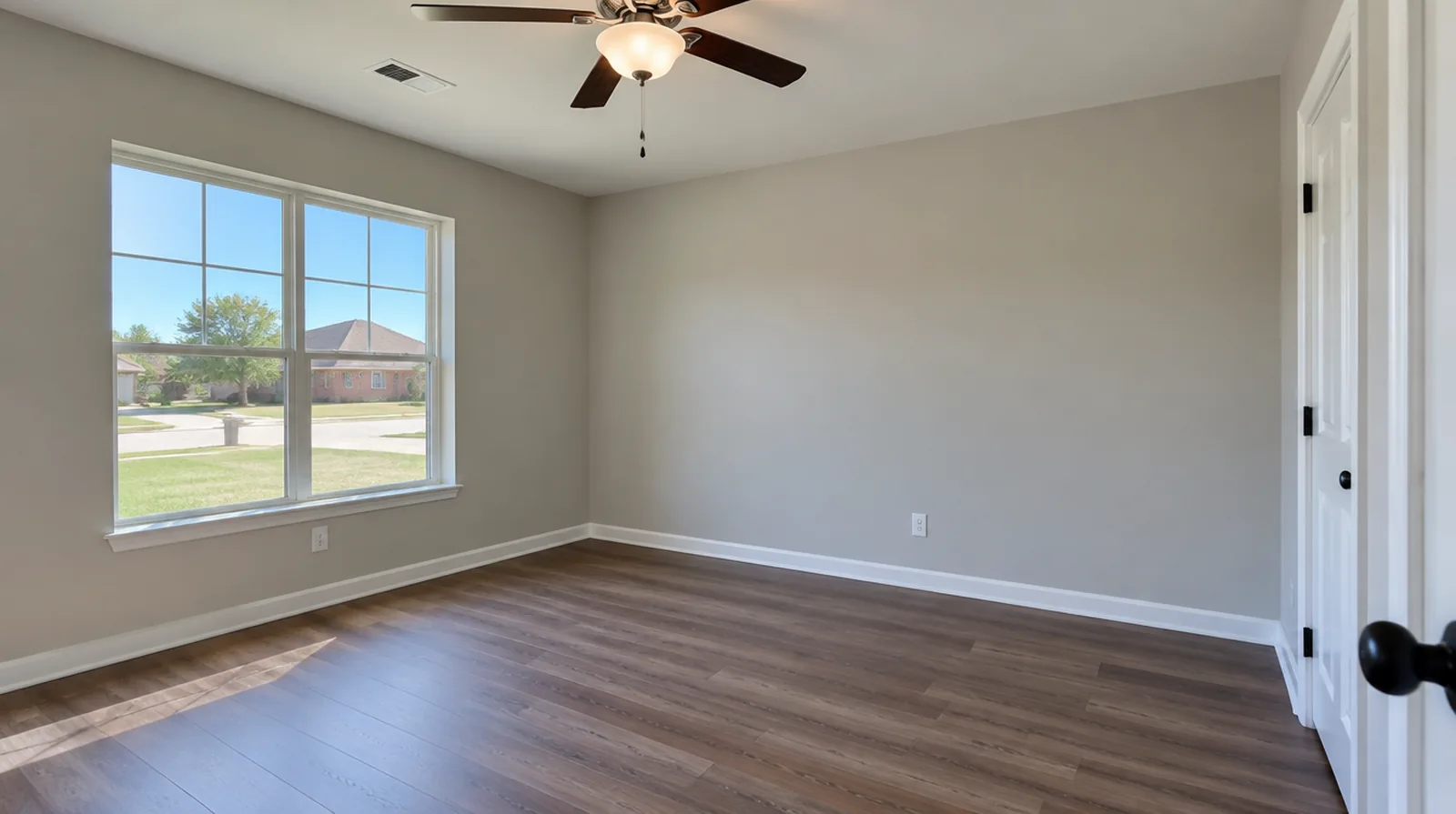
Set the paint boundary
Even a well blended patch can remain visible when touched up with an aged or unavailable paint color. Repainting the full wall from corner to corner may give a more consistent appearance. When damage followed other building work, describe the nearby alterations and the sequence between those changes and the first visible defect.
Document recurring movement
Cracks that return after cosmetic repairs deserve a conversation about movement or moisture rather than another quick cover. A drywall estimate should state when another trade needs to investigate before surface work proceeds. If a room has only limited ventilation, discuss how the finishing materials can dry without disrupting comfort or spreading dust elsewhere.
Project context in Norman
Keeping the cause, repair method and decorative finish distinct makes the proposal easier to understand. A drywall contractor can describe the surface work, while a concern about the supporting structure may need a separate professional assessment.
Scope questions before finishing
When a quote includes multiple visits, ask what happens during each stage and when the room needs to remain undisturbed between coats.
For a repair that crosses several surfaces, measure the affected planes separately so the estimate can explain where each finishing treatment starts and stops.
If the room will remain occupied, identify a workable separation between the project space and the space that still needs daily access.
If the surface condition is uncertain, allow for an assessment that can distinguish stable material from layers that ought not to be covered.
For an older repair with no clear history, describe when the mark first appeared and whether it has changed through more than one season.
For a limited patch requiring substantial setup, assess the complete package of access and protection rather than relating cost only to the opening size.
For a surface that will receive wall covering, share the product requirements early so the finishing stage supports the planned decorative treatment.
When painting is outside the proposal, describe the remaining decorative preparation clearly so another contractor can price that stage accurately.
For a wall receiving a decorative covering, provide its preparation requirements early enough for the drywall finish to support that product.
If materials must cross common building areas, plan the protection and access route so other occupants are not needlessly obstructed by deliveries.
For a distinctive existing pattern, retain a reference sample or detailed picture to make the matching discussion more specific.
When a paint contractor follows the drywall work, define the surface condition being handed over and decide who handles any minor final touch ups.
Explore the Norman drywall overview for related options, or read the project planning information before arranging the next stage.
More planning details for Norman
A Norman doorway with a recurring hairline crack is a reason to discuss movement history rather than immediately choose the quickest surface treatment. Note when the crack appears, whether nearby doors change operation and what earlier repairs involved. Once that boundary is clear, plan protection and access for the selected method.